
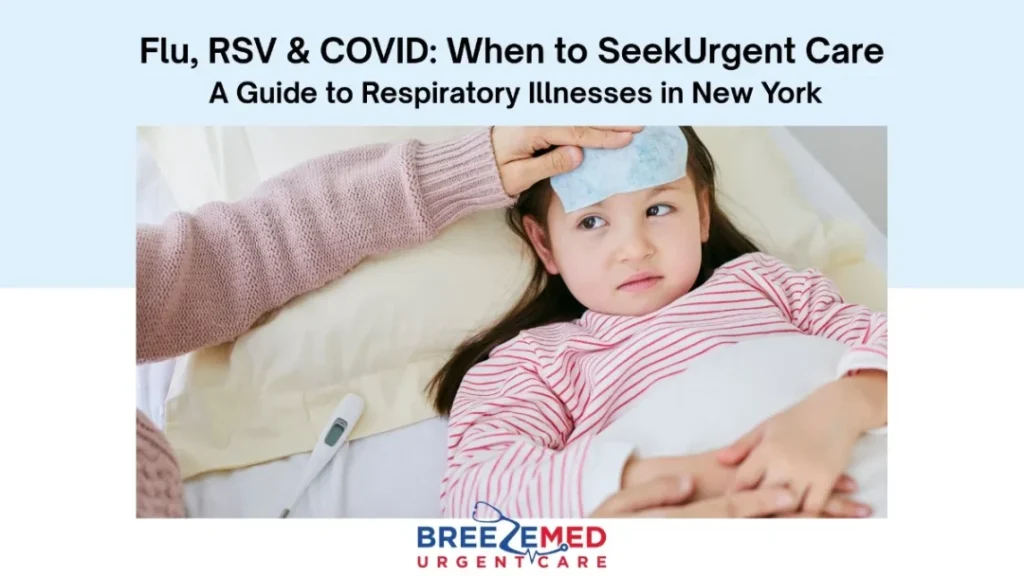
A Guide to Respiratory Illnesses in New York
Introduction
As fall and winter begin in New York, areas like Astoria and Queens see a significant rise in respiratory illnesses. This is an annual public health challenge every family faces.
Key Facts:
- Each year in Queens County, over 500,000 people experience symptoms of flu, RSV, or COVID-19.
- During winter, at least one person falls ill in 30% of Astoria households.
- Patients often wait 3-5 days before visiting an ER or clinic, which can worsen their condition.
- Delayed treatment can double or triple illness duration.
The Core Problem: Most people don’t know when home care is enough and when urgent medical help is necessary. This hesitation can be dangerous, especially for children, seniors, and those with weakened immune systems.
Why BreezeMed Urgent Care Matters
Located at 3274 Steinway Street, Astoria, NY 11103, BreezeMed is Queens’ trusted urgent care facility.
What Sets Us Apart:
- No appointment needed – Walk-ins welcome daily, 9 AM to 9 PM.
- Fast service – Most patients are seen immediately.
- Licensed professionals – Verified by Health & Wellness Medical Astoria PLLC.
- Comprehensive testing – Rapid diagnosis for Flu, RSV, and COVID-19.
- Complete care in one place – Medication, instructions, and follow-up.
- Insurance accepted – Most major plans welcomed.
What This Guide Covers:
- How to tell the difference between Flu, RSV, and COVID-19 symptoms.
- When home rest is sufficient vs. when medical care is urgent.
- Urgent Care vs. Emergency Room: Where to go.
- Identifying warning signs in children and seniors.
- What to expect at BreezeMed – The complete process.
- Best at-home recovery practices.
- Effective prevention measures.
Understanding Flu, RSV, and COVID-19
Seasonal Flu (Influenza)
- What it is: A highly contagious viral infection affecting the nose, throat, and sometimes lungs.
- Season in NY: Typically October to May, peaking December-February.
- Sudden Symptoms (within 24-48 hours):
- High fever (100°F – 104°F), chills.
- Severe body aches, headaches, eye pain.
- Extreme fatigue.
- Dry cough, sore throat.
- At Risk: Adults 65+, children under 5, pregnant women, those with chronic conditions (asthma, diabetes, heart disease), and immunocompromised individuals.
- Potential Complications: Pneumonia, bronchitis, worsening of asthma/COPD, heart issues.
RSV (Respiratory Syncytial Virus)
- What it is: A common virus causing lung and airway infections. Serious for infants and older adults.
- Symptoms Vary by Age:
- Adults/Older Children: Mild cold-like symptoms (runny nose, cough, low fever).
- Infants/Young Children: Watch for: Fast breathing, grunting, chest caving in, refusing to eat, dehydration (less wet diapers), bluish lips.
- Older Adults: Difficulty breathing, confusion, worsening of existing conditions.
- Serious Complications: Bronchiolitis (in infants), pneumonia.
COVID-19
- Current Status (2025): COVID-19 continues to circulate, with new variants emerging. Can still be severe for the unvaccinated and high-risk.
- Common Symptoms: Fever/chills, cough, severe fatigue, body aches, headache, sore throat. Loss of taste/smell is less common now but still a key differentiator.
- Long COVID: 10-30% may experience prolonged symptoms like fatigue, “brain fog,” and breathing difficulties for weeks or months.
Symptom Comparison Chart
Symptom | Flu | RSV | COVID-19 |
Fever | High, Sudden | Mild | Moderate to High |
Body Aches | Severe | Mild | Moderate |
Fatigue | Severe | Mild to Moderate | Severe, Can Be Long-Lasting |
Cough | Dry, Hacking | Wet/Phlegmy | Dry or Wet |
Breathing Issues | Rare | Common in Infants/Seniors | Fairly Common |
Unique Sign | Sudden Onset | Wheezing in young children | Loss of Taste/Smell |
When Is Home Care Enough?
Suitable for Home Care if:
- Fever below 101°F (38.3°C).
- Mild cough and runny nose.
- Minor body aches.
- Can drink fluids normally.
- Breathing easily, mentally alert.
Best Home Care Practices:
- Rest & Sleep: 7-9 hours nightly. Nap during the day.
- Hydration: Drink 8-10 glasses of water daily. Warm soups, tea with honey, electrolyte drinks.
- Symptom Relief:
- Fever/Pain: Acetaminophen (Tylenol) or Ibuprofen (Advil). Do not give aspirin to children.
- Cough: Honey (for those over 1 year), humidifier.
- Congestion: Saline nasal spray, steam inhalation.
- Nutrition: Light, easy-to-digest foods like soup, bananas, toast, yogurt.
Special Instructions for Children:
- Under 3 Months: Call a doctor for any fever.
- 3 Months to 2 Years: Contact doctor if fever over 100.4°F. Ensure fluids and rest.
- Over 2 Years: Monitor symptoms, keep home from school/daycare.
When to Go to BreezeMed Urgent Care
Go to Urgent Care For:
- Fever over 101°F lasting more than 3 days.
- Mild to moderate breathing difficulty or wheezing.
- Signs of dehydration (dry mouth, dark urine, dizziness).
- Symptoms worsening after several days.
- Need for testing (Flu, RSV, COVID-19, Strep).
- You are in a high-risk group (65+, under 5, pregnant, chronic conditions).
What to Expect at BreezeMed:
- Arrival & Registration (5-10 min): Walk-ins welcome. Provide basic info and insurance.
- Medical Exam (15-20 min): Vital signs check, consultation with a licensed professional.
- Diagnostic Testing (if needed): Rapid tests for COVID-19, Flu, RSV. Strep test. On-site X-ray if necessary.
- Treatment Plan (10-15 min):
- Medications (antivirals like Tamiflu/Paxlovid if appropriate, symptom relievers).
- Antibiotics only if a bacterial infection is confirmed.
- Written care instructions and follow-up info.
When to Go to the Emergency Room
Call 911 or Go to the ER Immediately For:
- Severe breathing difficulty, bluish lips/face, inability to speak full sentences.
- Chest pain or pressure, especially with pain radiating to arm/jaw.
- Severe confusion, dizziness, fainting, or seizures.
- Signs of severe dehydration (no urine for 12+ hours, can’t stand).
- In infants: high fever (100.4°F+ under 3 months), severe breathing trouble, not waking up, bluish color.
Simple Rule: If you’re wondering “Is this life-threatening?” go to the ER or call 911.
Recovery & Prevention
Faster Recovery Tips:
- First 48 Hours: Complete rest, constant hydration, light nutrition.
- Days 3-7: Gradual increase in activity. Finish all prescribed medications.
- Days 7-14: Return to normal routine slowly. Prioritize sleep and nutrition to rebuild immunity.
Prevention is Key
- Vaccination: The best protection.
- Flu Shot: Get it every fall (September-October). Available at BreezeMed.
- RSV Vaccine: Recommended for adults 60+ and pregnant women (32-36 weeks). Ask if eligible.
- COVID-19 Booster: Updated annually. Get it with your flu shot.
- Vaccination: The best protection.
- Daily Habits:
- Wash hands frequently with soap and water for 20 seconds.
- Wear a mask in crowded places if you are high-risk or during peak season.
- Improve indoor air flow (open windows, use air purifiers).
- Disinfect high-touch surfaces.
- Strengthen your immune system with a balanced diet, sleep, exercise, and stress management.
Summary: Key Points to Remember
- STAY HOME if you have mild symptoms (fever <101°F) and can manage with rest/fluids.
- GO TO BREEZEMED URGENT CARE for persistent fever, worsening symptoms, testing needs, or if you’re in a high-risk group.
- GO TO THE EMERGENCY ROOM or CALL 911 for severe chest pain, breathing difficulty, confusion, or bluish coloring.
- PREVENT with annual vaccines, good hand hygiene, and staying home when sick.
BreezeMed Urgent Care
3274 Steinway Street, Astoria, NY 11103
Daily: 9:00 AM – 9:00 PM
Walk-Ins Welcome | Insurance Accepted
Disclaimer: This guide is for educational purposes only and is not medical advice. For any specific health concerns, consult a licensed healthcare provider. In an emergency, always call 911 or go to the nearest emergency room.
BreezeMed Urgent Care is part of Health & Wellness Medical Astoria PLLC, fully licensed and regulated in New York State.
https://shorturl.fm/yfdWq
https://shorturl.fm/8z9RV
Fast indexing of website pages and backlinks on Google https://is.gd/r7kPlC
Hello https://is.gd/tvHMGJ
unlocker.ai – The Ultimate AI Tool for Bypassing Restrictions and Unlocking Content Seamlessly!
Unlock exclusive affiliate perks—register now!
Turn your traffic into cash—join our affiliate program!
9288928 unlocker.ai
Refer and earn up to 50% commission—join now!
Earn passive income on autopilot—become our affiliate!